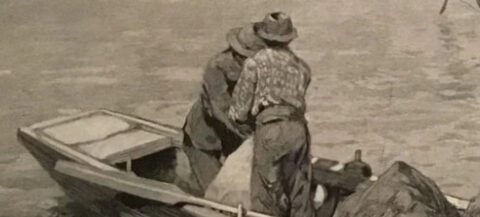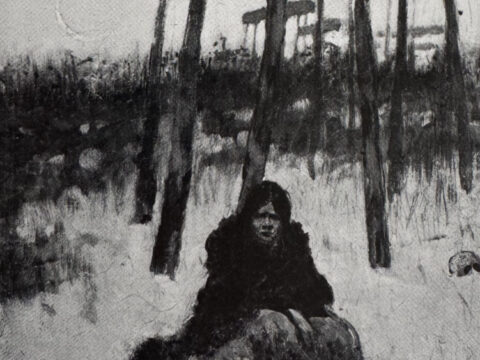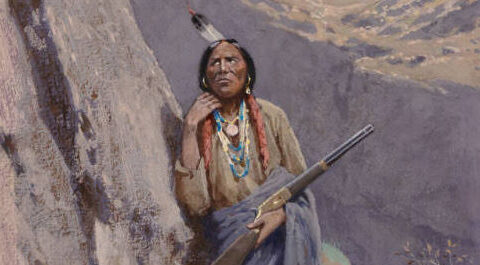
Published February 14, 1891, Farny’s The Last Scene of the Last Act of the Sioux War can be found on page 120 of Harper’s Weekly. Whether this work was a comment on Sitting Bull specifically or Sioux tribe in general, Farny could clearly see the Lakota nation of the 1880s he knew would never be the same.
Farny expressed his unhappiness with the Government’s handling of the ‘arrest’ of Sitting Bull that resulted in his death, as he expressed to The Cincinnati Commercial Gazette, Dec 18, 1890, page 12:
“I regret the death of Sitting Bull, not out of any sympathy for him, but the fear that it may cause a great deal of bloodshed. Judging of course by the dispatches in this morning’s papers, it seems to me that it was not only pre-meditated, but unnecessary and cruel. I believe that Sitting Bull could have been arrested without the slightest trouble and transported to some other part of the country by the U. S. soldiers. You will observe that the soldiers were three miles away from Sitting Bull’s camp and the Indian police were sent on ahead to arrest him, and in the conflict which followed he was killed, but his entire band was captured by the soldiers. Sitting Bull was too smart an Indian to think of fooling with the U. S. Army. He and his followers know enough to be convinced that a conflict with the Government troops would mean extermination. I do not believe that they were well armed, and in fact Major McLaughin’s report of his last visit to Sitting Bull’s camp confirms that fact.”
Farny’s prescient understanding of the situation is such that only eleven days later the Wounded Knee Massacre occurred.
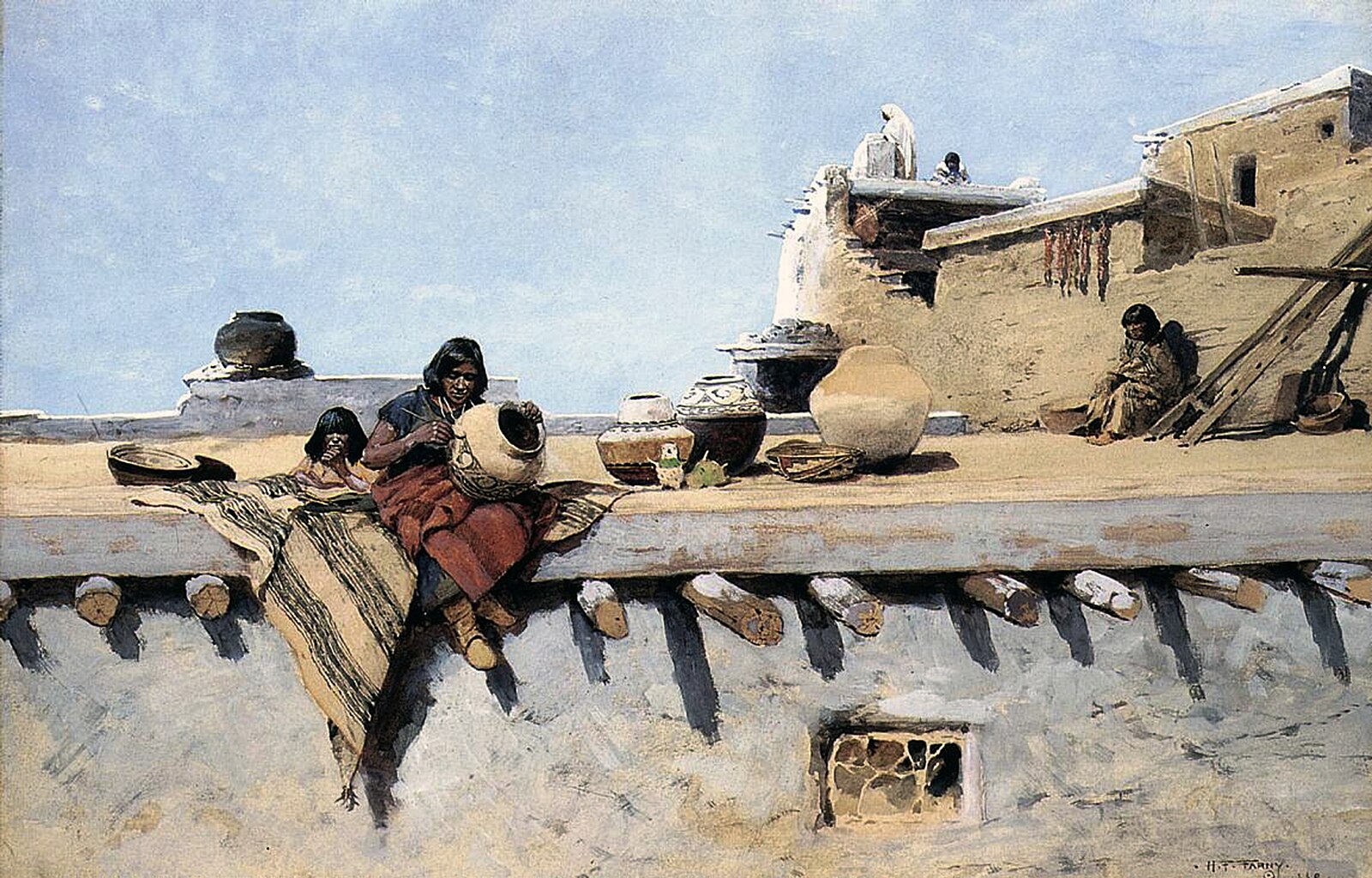
This work is also a play on his very first Indian work from his first visit West in 1877.
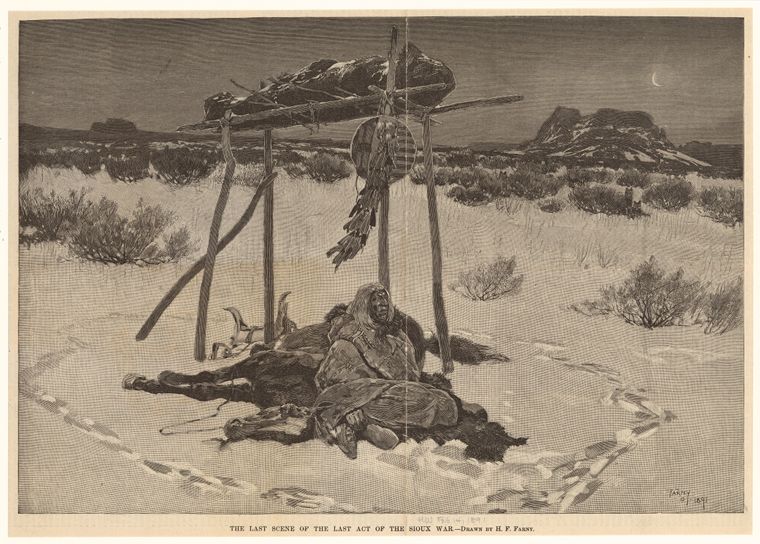
I have yet to find the location of the original painting.