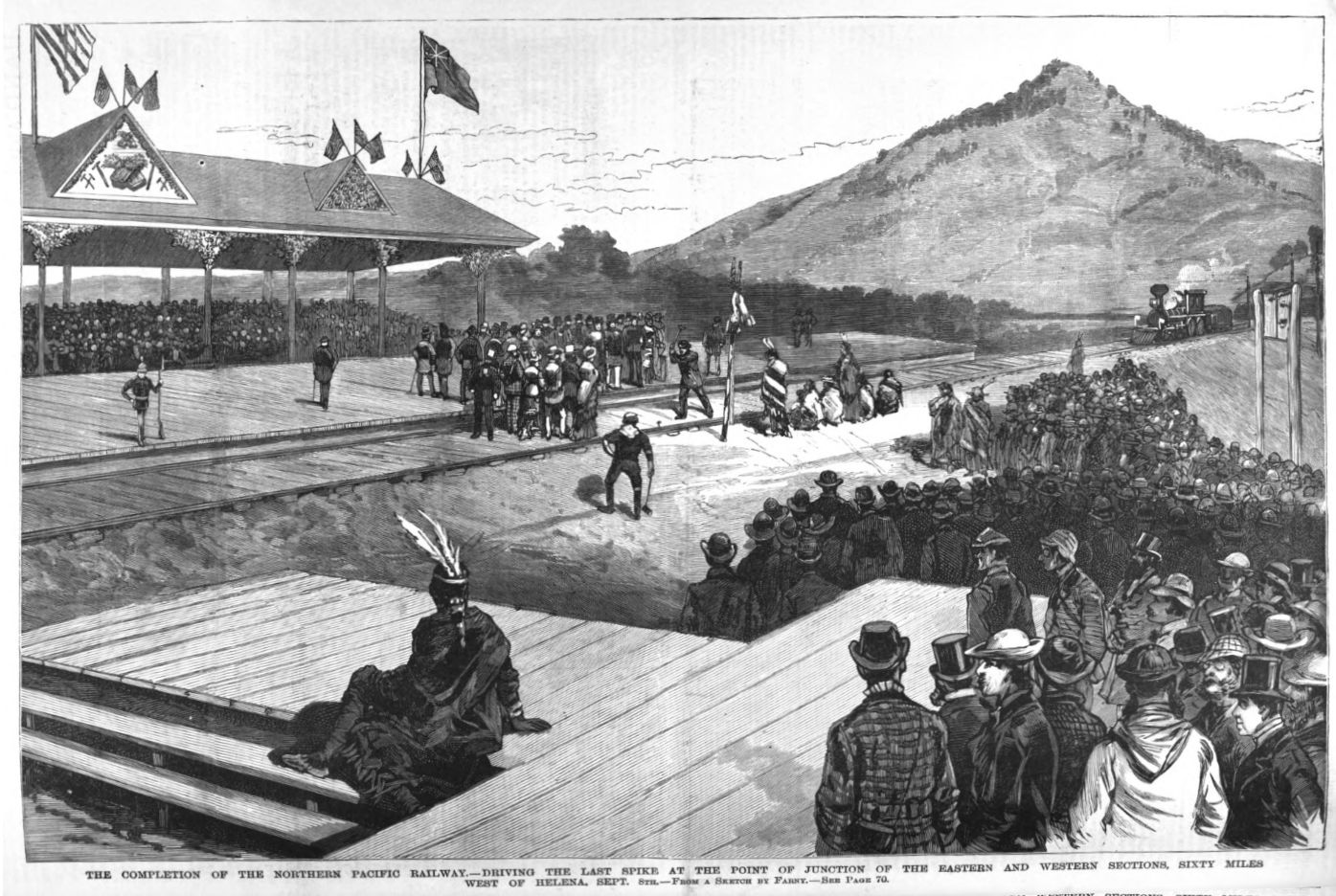
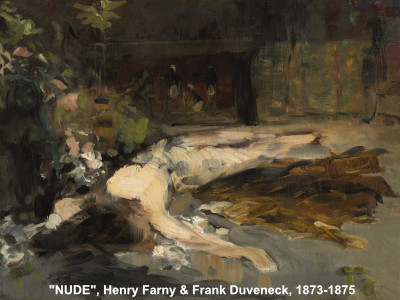
Henry Farny was a long time member of the Cincinnati Sketch club and a co-founder of its subsequent iteration, the 1890 Cincinnati Art Club. But, long before Farny entered the art scene, the artists of Cincinnati felt compelled to fellowship, inspired at least in part by their European ancestors, especially in France where the emergence of academies to foster the arts appeared as early as 1570 with French Poet Jean-Antoine de Bairf’s Académie de Poésie et de Musique during the Renaissance.
For those artists not desiring the formal academy experience, the rise of Sketch Clubs in England at the turn of the 1800s offered a less structured alternative. In 1799, members from the recently formed Monro Academy, a school for artists, launched The Sketching Society whose goal to create “original designs for poetick passages”, but also to provide a forum to exchange ideas and socialize.
In America, the Philadelphia Sketch Club claims the mantle of being the oldest continuous sketch club in the United States, having been founded in 1860, while the Salmagundi Club in New York City, originally called the New York Sketch Club, is another very old one, having been formed in 1871 and which continues today.
In fact, the earliest formal American sketch club appears around 1829 in New York City. The New York Sketch Club, as it was called, was founded about the same time as the National Academy of Design, as some of the folks were involved in both. Clearly inspired by the English, the New York bylaws and framework of bi-weekly meetings were adopted from the English Sketching Society. While the New York Club began as a sketch club, by 1849 it had devolved into more of a social and reunion club.
Perhaps because of the shift in focus of the original New York Sketch Club, in 1847 a different New York Sketch Club was founded by a group of professional and amateur artists:
“It is their custom to spend the early part of the evening in some study connected with the Arts, and each member in turn expounds for the general edification. The Club then adjourns, and an hour or two swiftly passes in chit-chat-and in the examination of the host’s larder and the budget of sketches for the night.” source
The addition of a monthly topic may have been a unique new feature of the “new” New York Sketch Club, because the Brooklyn Eagle reported on it in December of 1947, noting:
There is a society of artists in New York, called the “Sketch Club,” at the last two meetings of which sketches of the following subjects were presented, as we learn from the Express. The various modes of treating the idea are quite crecitable to the ingenuity of the artists.” The Club’s topic of the earlier meeting was “Too Soon” and the subsequent meeting was “Happiness”. source
It’s not clear if or how the 1847 New York Sketch Club morphed into the 1871 New York Sketch Club mentioned on the Salmagundi Club’s website, but I’d guess there was a break between the two at some point, which happened several times to Cincinnati clubs.
While the art scene in Cincinnati wasn’t as large as New York’s, the rapidly rising population coupled with the promotion of free education, a talented class of German immigrants, and more spurred the rise in arts in Cincinnati, which was once described as “an oasis of intellectual and creative talent west of the Appalachians”.
The need for a Cincinnati drawing or sketch club was suggested as early as February 01, 1855. On that day, a Cincinnati Enquirer story explained how the New York Sketch Club had held a semi-annual meeting recently. The article stated firmly, “Cincinnati may well be called the Cradle of the Arts, but when the artist requires the substantials of life, to other communities must he look for his bread and butter.”
This suggests both that there was not yet a Cincinnati sketch or art club at that time.
It took almost four more years, but on December 04, 1858, Will Noble and Henry Worrall finally formed the first Cincinnati Sketch Club. Noble, who at the age of 24, had earlier led the 1854 formation of the Cincinnati Shakespeare Club, was named one of the Sketch Club’s officers, while James H Beard was made president.
The Club’s meetings and events occasionally reached newspaper print, articles that usually included the sketch topic of the month. As an example, In February of 1859 the club’s topic was “Lost”. Members gathered on a Saturday to view each other’s works. The Cincinnati Daily Gazette described a few of their efforts:
“There was a sketch of a girl walking in the garden, toying with her lover—taking the leap into the dark river – another sketch in oil, was of a man lost on the prairies in a snow storm—a vessel lost, was the subject of another—there was a view of an omnibus with a wheel lost—another sketch showed the crier, crying a lost child, who on another part of the paper, was bitterly crying herself”
Following the mutual admiration of each other’s projects that day, the club then passed some business, electing what may have been its first honorary member, Mr. Samuel N. Pike, the owner of the Pike Opera House, as a show of appreciation for his support of the arts in Cincinnati. With the formal festivities over, the members enjoyed their time together with chess, music, and conversation. The next meeting would take place two weeks hence.
If the scattered newspaper reports are correct, meetings occurred regularly into the Civil War years or at least they did until late 1863. That’s when reporters’ articles about the Sketch Club ceased, indicative of the Sketch Club’s demise. Author Henry Howe, in his 1886 Historical Collection of Ohio, offered his view about why this first iteration of the Sketch Club failed, claiming, “the club began to collapse when preachers and wealthy merchants were introduced as honorary members, who, by an excess of good fellowship and conviviality proved the unsuspecting club’s undoing.”
The Sketch Club may have faltered, but its members continued forward without the formal fellowship. That the artists remained a fairly cohesive group was made clear three years later during a heated dispute within the Cincinnati artistic community over a few weeks in the summer of 1866.
Curiously, when the dispute was resolved, the victorious artists formed the Associated Artists of Cincinnati. Familiar names included C.T. Webber, Henry Mossler, Henry Worrall, and Will Noble. As part of the group’s formation, they established a formal committee to create a series of suitable buildings for an Academy of Design.
In February of 1867, The Cincinnati Daily Gazette provided further insights into the newly formed organization. The article noted the demise of the first Sketch Club, but then explained that those same artists now worked together as the Association of Artists, a slight mistake on the name, but close enough. It was also noted that while the former Sketch Club held fun events with lots of sketches, the new group featured more completed paintings at their events, suggesting the art mattered more. Whether Farny was a part of this newly created group isn’t clear; if he was, he wouldn’t be participating for long, as he would soon be headed to Europe, thanks to Thomas Buchanan Read.
After its formation in 1866, the Associated Artists of Cincinnati flourished for a while. But, within a few short years the group fell apart. An opinion piece in The Cincinnati Commercial in 1869, under the psudonuym “Paul Palette”, provided one view of the situation, describing disputes over control, that the Association had become managed by “three persons only, two professors and one “on the verge”.”
The demise of Associated Artists appears to have left a void in the formal brotherhood of artists. There’s no evidence that a new club took its place right away. It wasn’t until 1874 that a new group, the Amateur Sketch Club, was mentioned in the news. This new club had enough legs that it lasted well into the late 1890s, before the Cincinnati Art Club formerly launched. (note .. there is a very brief reference to a Cincinnati Sketch Club that formed in 1870, but that was actually an amateur theatre group).
There was at least one other Cincinnati-based sketch club, the Woodhawks, introduced in May of 1884. Members included Farny, Sharp, and a few others. It’s unclear how many members eventually joined, but the club only appeared in newspapers during the early summer of 1884 and disappeared from the news after July of 1884.
How did the Cincinnati Art Club succeed where others failed? There’s an argument to be made that Farny, who became the club’s second president, amped up the fun level of the club. It was under his administration that the club’s famous end-of-the-year artistic-party-bashes began. Whatever the reasons, a strong fellowship formed among club members, one that has lasted into today.
Below are two reports, one about the 1897 party and one about the 1898 party. You won’t be able to read the text, but the volume of reporting and images evidences how much was going on at these highly irreverent parties.
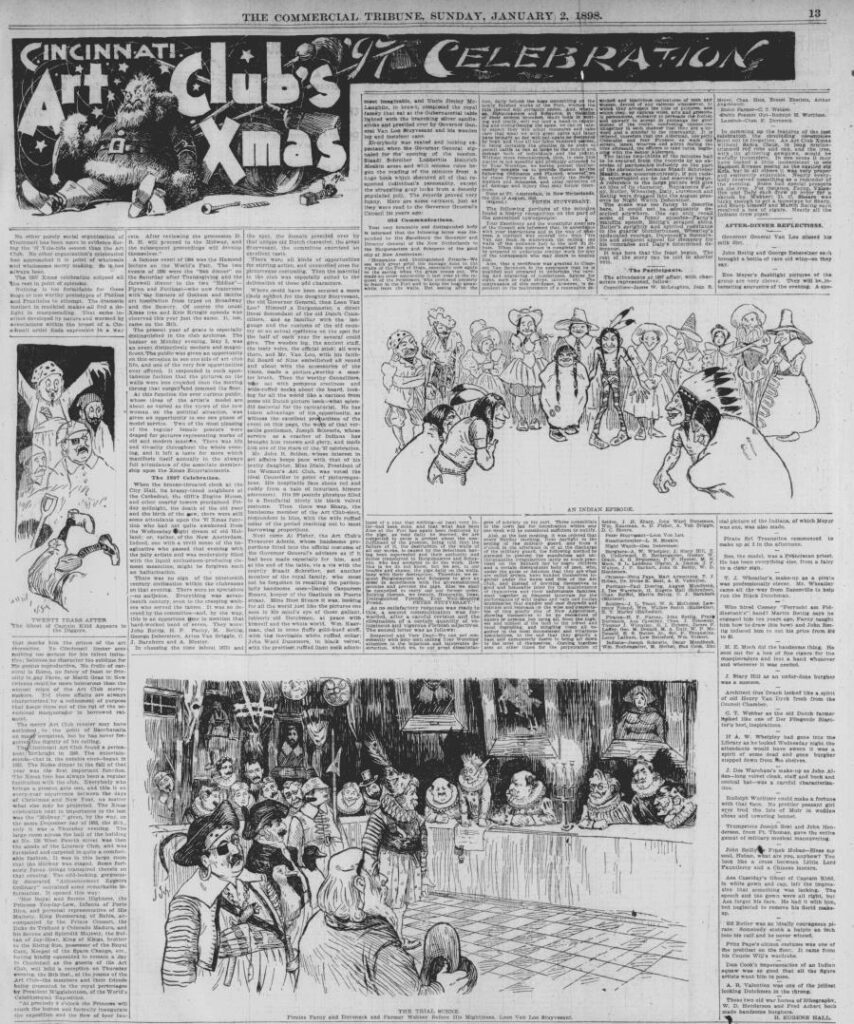
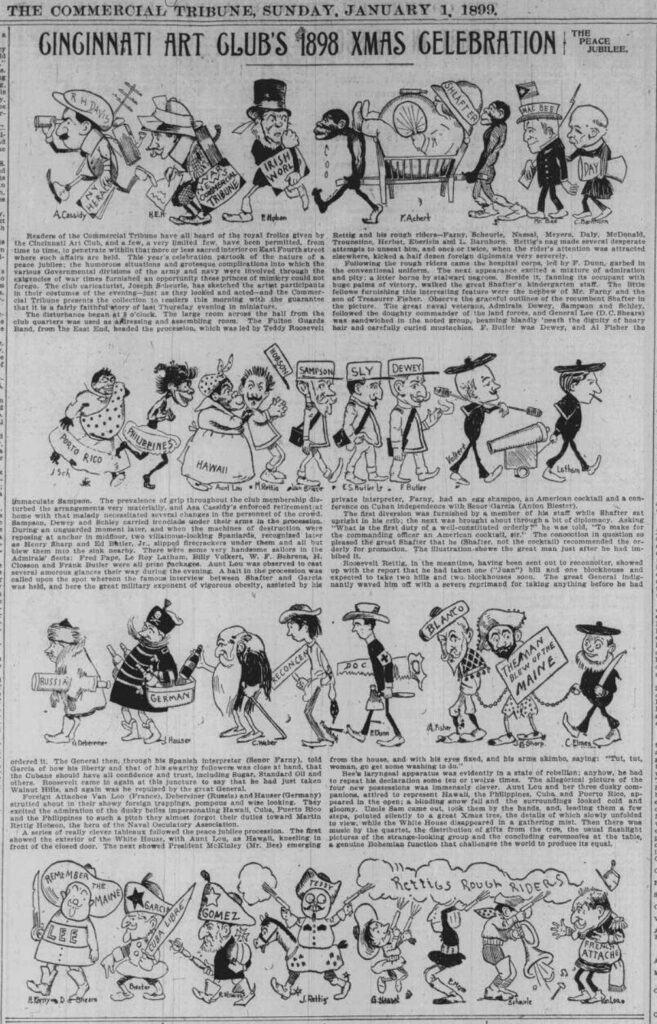
Farny and his bohemian, think a little different mentality, appeared to both love and fuel these events.