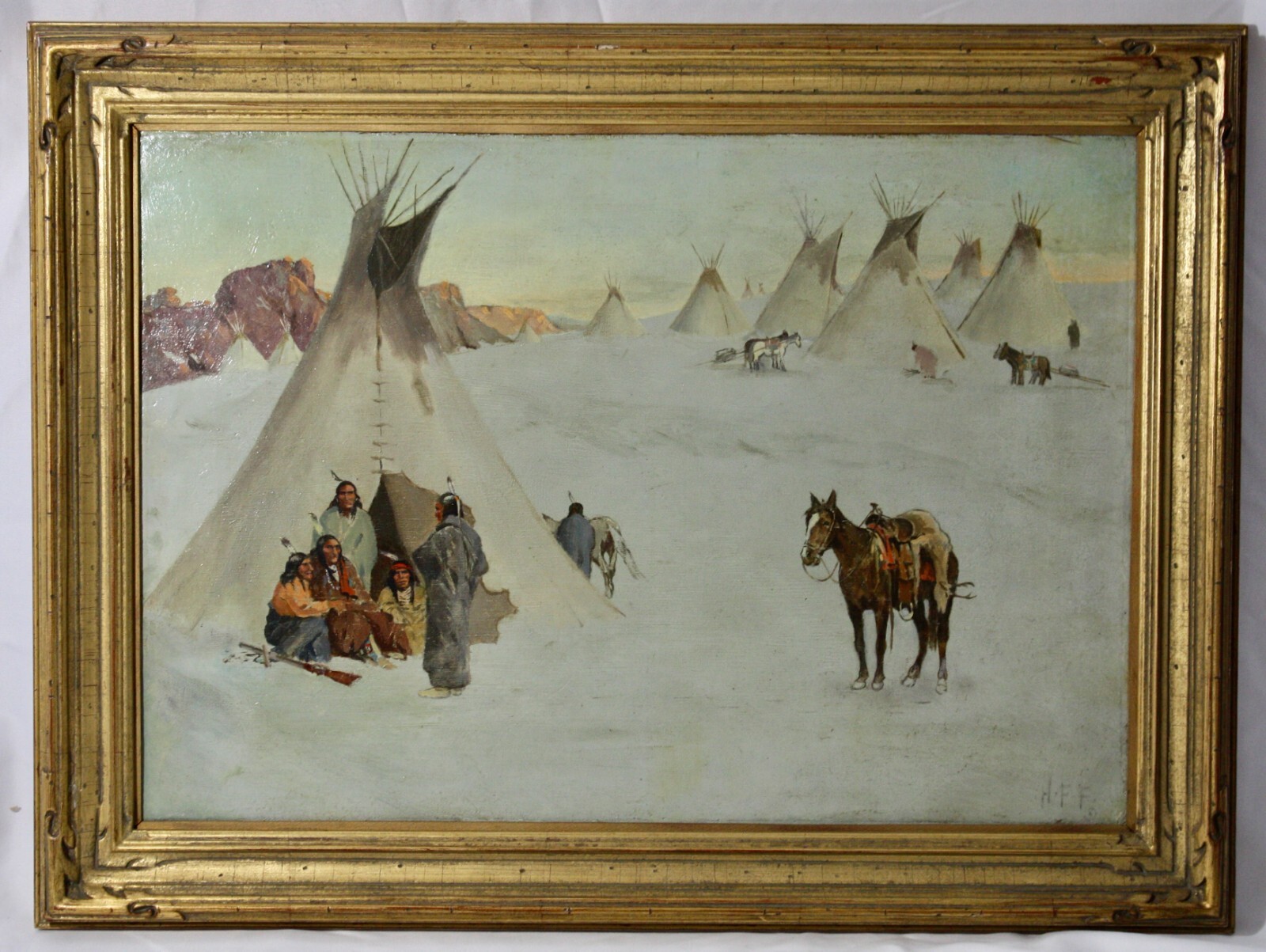
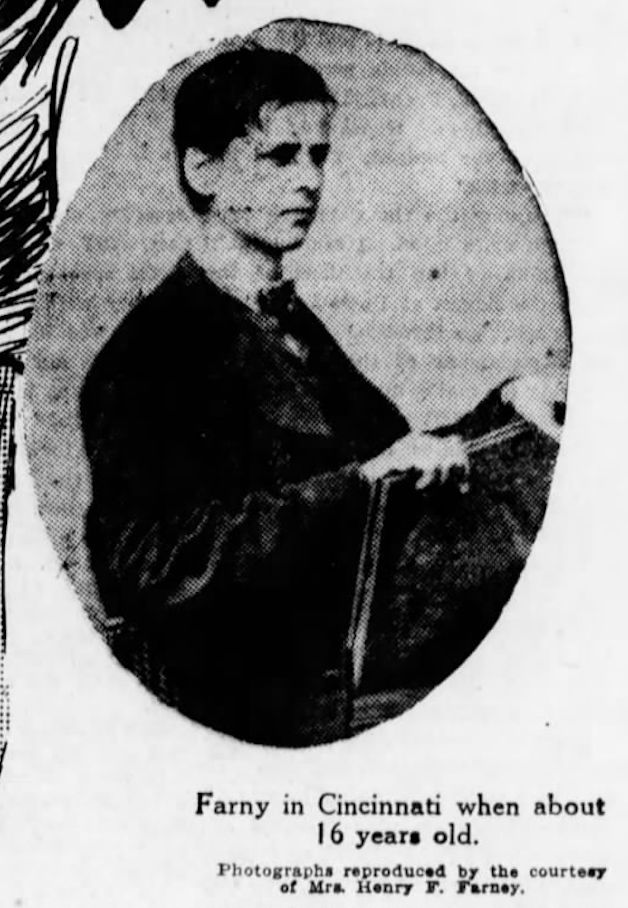
Henry Farny embraced the camera as an important tool for documenting scenes and subjects that interested him. When his interest in photography began is unknown, but we do know that at least by age 16 in 1863 he’d literally been exposed to a camera, as can be seen in this photo. I can not say for certain if this is the earliest photo of Farny or not, but it is the earliest I have.
Additional photos of him were taken in Europe, first in 1868, then later in 1873. During these formative years of Farny’s maturation as an artist, there became an acceptance by some in the art world of the camera’s practical use as a memory tool, for capturing a subject, then painting from the photograph later. That soon led to debates about whether photography was an art or not. Farny saw the camera as a tool, but later in life also judged some photography shows, so it seems he eventually saw it as art.
There’s also no reference to him taking pictures during his 1877 trip to visit the Sioux; in addition, there’s little in the way of paintings from that trip, so it suggests he didn’t bring one.
Farny’s friend Judge Nicholas Longworth, II, became an avid photographer in 1878 (according to this news article). In 1879, he included his camera equipment in the Canoe Club adventure down the Alleghany and took photos of his fellow three canoeists, one being Farny. The Cincinnati History Library was the recipient of at least a portion Longworth’s photo collection, though it is my understanding the archive still needs to be organized.
The earliest documented case of Farny using a camera was during his 1881 trip to Fort Yates to visit the Sioux. While there, he later reported to a newspaper, he was able to take 124 photos. Whether these photos have survived is unknown. A newspaper article from 1882 also suggests that Farny may have started using a camera “within the last twelve months“, which also fits the Fort Yates time frame.
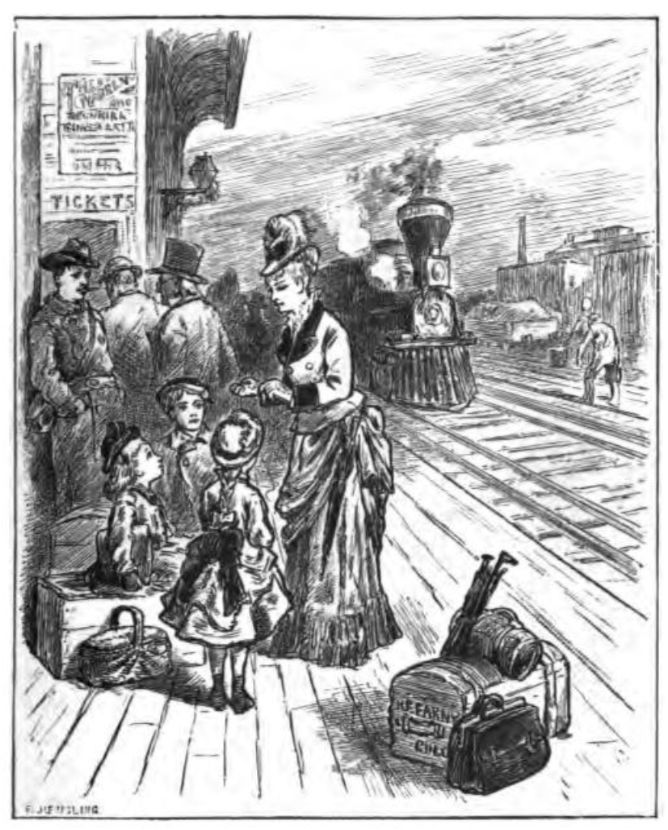
In 1883, as part of the Northern Pacific trip, we know Farny brought a camera, because he hurriedly set up his camera in an attempt to take photos of an Indian mother and her children in Puyallup Washington, but the Indians escaped into their tepees before he was ready. The journalists accompanying Farny teased him for missing the shot.
In January of 1884, Farny and nine others inaugurated the Cincinnati Camera Club. Later that year, during a club outing on the Ohio River, Farny was using a Blair Box camera, probably a Blair Tourograph model, a portable dry-plate camera system.
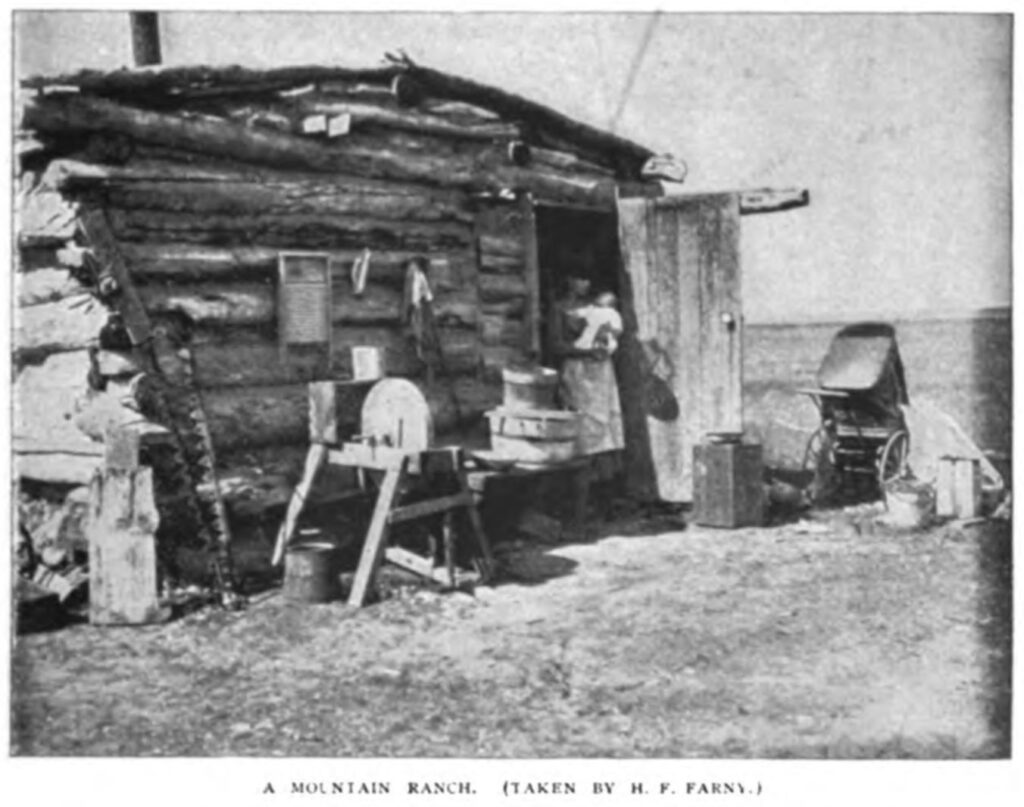
For the 1884 boat trip on the Missouri for Century Magazine, Farny once again brought his camera, described by a newspaper as an “Instantaneous Camera”, most likely, again, some kind of Tourograph. I have come to believe that in Montana Farny took the below photo of a rancher’s two-room log cabin, his wife and their baby standing at the entrance. Smalley described the scene in his Century article. Farny’s photo didn’t appear in Smalley’s article; instead, it appeared in a September 1887 Century Magazine article about Cincinnati Camera Club and how it was one of the best clubs in the country.
In December of 1884, Farny read a paper to the Cincinnati Literary Club called “Photography Out West”, though it’s not clear whether this paper highlighted the photos he had taken, explored the challenges of photography out west, or some other related topic.
In 1889, Edward Muybridge‘s tour of “Animal Locomotion” attracted Farny’s interest. Farny purchased some of Muybride’s photographs. Whether Farny bought an abridged 100-plate version of Muybridge’s works for $100 or the full leather-bound edition for $600 isn’t known.
Over the ensuing years, Farny participated in photography shows, Stereo-opticon shows, and even judged photography shows. The best evidence of his later camera use we currently have came during 1895 and 1896, when Indians stayed near the Cincinnati Zoo during the the summer months. In 1895, it was an accidental stay, but it proved so popular with Cincinnatians that a second visit by some other Indians was arranged for the summer of 1896. Farny took photos both years, but we only have photos from their 1896 stay. Six of them are preserved in the archives of the Cincinnati Public Library. Here is one example:
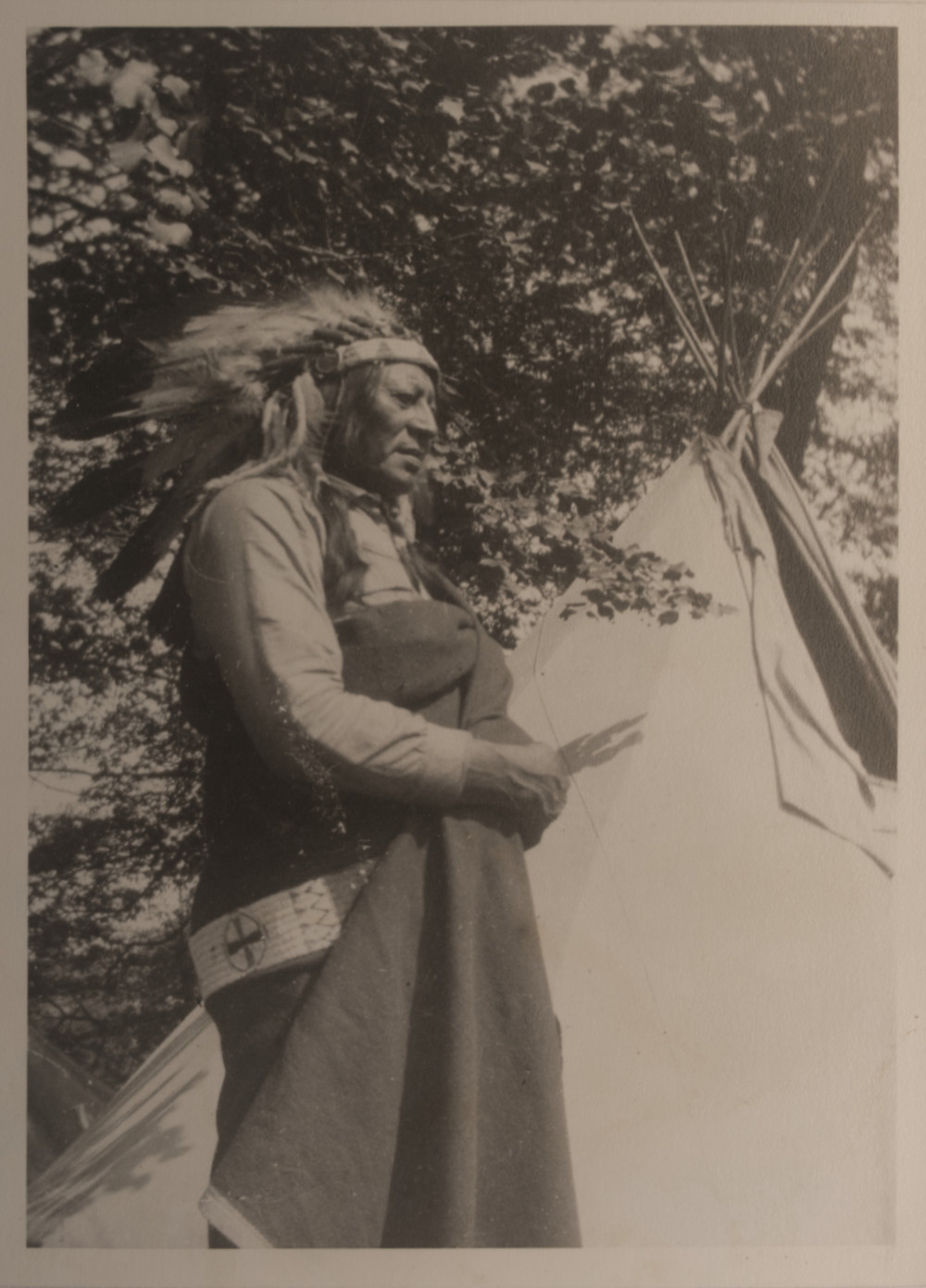
In 1895, when Farny’s dog Jack went missing, his friend Bee Jordan went looking around town for the dog carrying a picture Farny had taken of the dog to help jog people’s memories. It’s not clear whether Bee found the dog or not.
When Farny died, among his possessions was some camera equipment. A couple pieces were auctioned off recently. This first photo shows a Folmer & Schwing Box Camera that he owned:
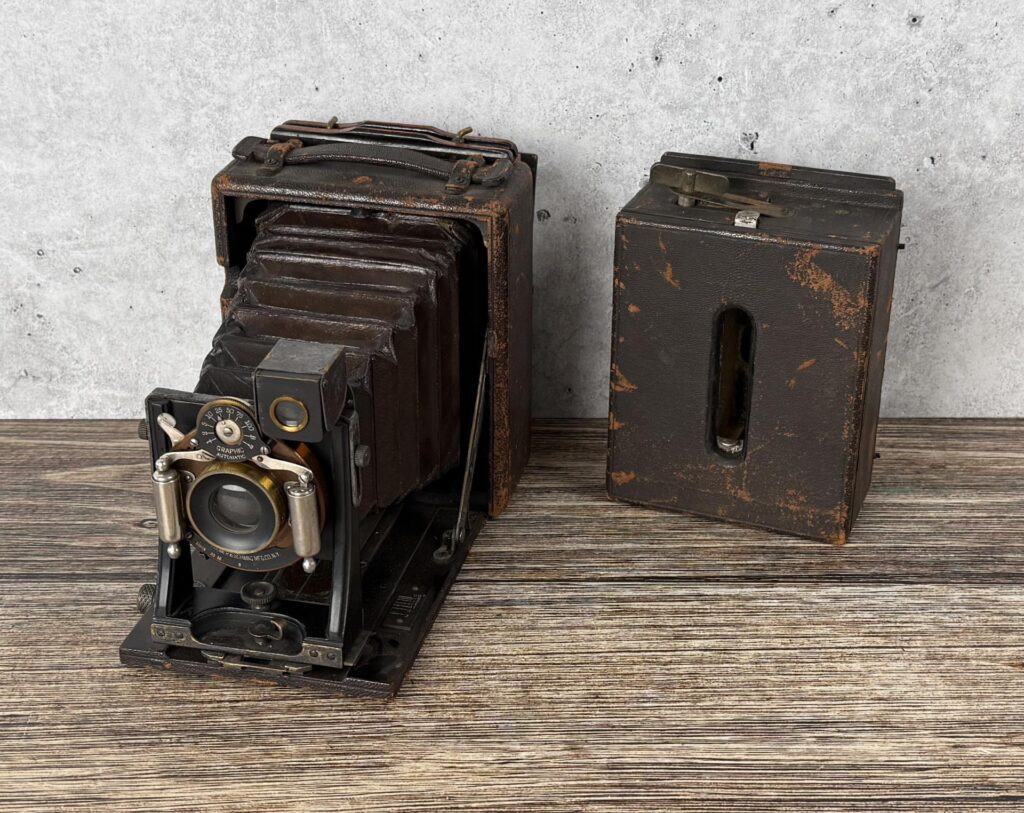
That’s a general overview of Farny connections to photos and cameras. What happened to his enormous collection of photos remains a mystery to me.